- Instituții publice, autorități și organisme de reglementare (GOV)
- Asociații profesionale, patronate și organizații (Professional Associations)
- Organizații non-profit, fundații și asociații umanitare (NGO)
- Publicitate, comunicare și servicii de imagine (PR & Branding)
- Evenimente de business, târguri și conferințe (MICE)
GIMAV - Associazione Italiana Fornitori Macchine ed Accessori per la Lavorazione del Vetro
Telefon:
+39 02-33007032
Domenii:
Asociații profesionale, patronate și organizații (Professional Associations)
Evenimente de business, târguri și conferințe (MICE)
Evenimente de business, târguri și conferințe (MICE)
Descriere
GIMAV este Asociația care reunește producătorii și furnizorii italieni de utilaje, accesorii, echipamente și produse speciale pentru prelucrarea sticlei.
Prezentare
GIMAV Drives Innovation, Sustainability, and Global Competitiveness

Lucia Masutti
Functia/Firma: director general al GIMAV și Vitrum;
Experiență profesională: 6 ani în industria vitrajelor.
Exporturile italiene de echipamente de procesare a sticlei rămân un factor major de creștere, cu piețele europene - Germania, Franța, Spania și țările din Europa de Est - pe prima poziție în topul preferințelor. România este identificată de experții asociației GIMAV (Gruppo Italiano Costruttori Macchine e Accessori per Vetro) ca o piață strategică în Europa de Est, cu potențial ridicat, datorită activității susținute în construcții, proiectelor de infrastructură finanțate din fonduri UE și unei creșteri a interesului pentru eficiența energetică și performanța sporită a clădirilor. Provocările actuale, precum costurile energetice, disponibilitatea materiilor prime și volatilitatea logistică, sunt transformate în oportunități pentru accelerarea automatizării și a eficienței energetice. De asemenea, târgurile internaționale, cum ar fi Vitrum, constituie un indicator esențial al vitalității pieței și o oportunitate de acces la tehnologii avansate și rețele globale.
- What is Vitrum and GIMAV, and what are your mission, segments, priorities, and strategic objectives?
- Vitrum and GIMAV represent the entire value chain of the glass industry, from flat and hollow glass processing technologies to architectural, façade, automotive and other specialized glass applications. The mission of GIMAV is to support the competitiveness, innovation as well as international expansion of Italian glass technology manufacturers, promoting excellence in engineering, automation, sustainability, and digital transformation. Vitrum, as the association’s flagship event, acts as a global platform for business, technology transfer, and strategic dialogue within the glass and façade ecosystem. Our main priorities today are: strengthening the international positioning of Italian glass technologies; supporting innovation in automation, digitalization as well as energy efficiency; fostering skills development and generational transition within the industry; positioning Vitrum as a hub for future-oriented industrial innovation. Over the next 12-24 months, our strategic objectives focus on accelerating the renewal of Vitrum through new content formats and innovation-driven projects, expanding international partnerships - especially in high-growth markets - and supporting our members in addressing energy transition, sustainability and Industry 4.0 and 5.0 challenges.
- How have export markets evolved, and which regions are key for Italian glass technology?
- Exports remain a fundamental growth driver for GIMAV members. In the last year, we have observed a gradual recovery and rebalancing of export markets, despite geopolitical uncertainties and macroeconomic pressures.
Europe remains a core market, particularly Germany, France, Spain and Eastern Europe, while North America continues to be strategically important for high-end technologies. At the same time, the Middle East, Southeast Asia along with selected African markets are showing increasing demand, especially for advanced processing solutions, energy-efficient glazing and automated production lines. Eastern Europe, in particular, stands out for its combination of infrastructure development, construction growth and increasing quality requirements, making it a key area for medium-term expansion.
Europe remains a core market, particularly Germany, France, Spain and Eastern Europe, while North America continues to be strategically important for high-end technologies. At the same time, the Middle East, Southeast Asia along with selected African markets are showing increasing demand, especially for advanced processing solutions, energy-efficient glazing and automated production lines. Eastern Europe, in particular, stands out for its combination of infrastructure development, construction growth and increasing quality requirements, making it a key area for medium-term expansion.
- What challenges does the supply chain face, and how competitive are Italian manufacturers?
- The glass and façade supply chain is currently facing a complex mix of challenges and opportunities. Energy costs, availability of raw materials, and logistics volatility remain critical factors, although the situation has improved compared to previous years. Italian manufacturers have demonstrated strong resilience, thanks to flexible production models, vertical integration, and a strong focus on high-value-added technologies rather than commodity products. In façades and architectural glass, Italian companies are highly competitive globally due to their ability to combine advanced engineering, customization, aesthetic quality and reliable after-sales service. The main opportunity lies in transforming supply chain pressure into acceleration toward automation, energy efficiency and smarter production processes.
- Why is Eastern Europe, and Romania in particular, important for GIMAV members?
- Eastern Europe plays a strategic role in the development plans of many GIMAV members, and Romania is one of the most dynamic and interesting markets in the region. Compared to other Eastern European markets, Romania is characterized by fast-growing demand for modern façade systems, increasing alignment with European quality and sustainability standards, and a market that is still evolving, leaving room for technological upgrading. This creates significant opportunities for Italian suppliers of high-performance glass processing technologies and façade solutions. Also, the glass processing machinery sector accounts for approximately 20 million euro of Italian exports in this sector (approximately 1% of total exports). Although Italian export forecasts for the sector are slowing down - and this also applies to Romania - the country remains a mature and solid destination market for Italian capital goods, including those for glass processing. Italy is seen as a supplier of medium-high quality machinery, reliable technology and process know-how, not just "stand-alone" goods. Furthermore, "Made in Italy" is perceived as superior to low-cost competitors, more flexible than the big German players, and ideal for medium-sized plants. Romania is home to flat glass factories (float and processing), hollow glass production (containers) and a widespread network of small to medium-sized processors.
- How do energy efficiency, digital tools, and automation influence the sector?
- Energy efficiency is a central theme for the sector, both in construction applications and in manufacturing processes. Our members are actively developing solutions that support high-performance façades, low-emissivity glazing, solar control glass and advanced insulating systems. At the same time, digital tools such as BIM integration, artificial intelligence, data-driven production management, and advanced factory automation are increasingly adopted. These technologies improve productivity, reduce waste, enhance quality control and support sustainability goals, both in the factory and on site. Smart glazing, predictive maintenance and digital twins are no longer future concepts but concrete solutions already entering the market.
- What is the relevance of market indicators and trade fairs like Vitrum?
- Despite global uncertainties, the Italian glass technology sector continues to show strong export orientation and innovation capacity. Trade fairs remain a key indicator of market vitality. Vitrum has confirmed its role as a strategic meeting point for international buyers, technology suppliers and decision-makers, with a growing focus on innovation, sustainability and future scenarios. For Eastern European stakeholders, Vitrum represents a privileged access point to advanced technologies, know-how and global networks.
- What are the main risks and opportunities, and what is your message to the Romanian market?
- Looking at the next 2-3 years, the main risks include energy volatility, geopolitical instability and skills shortages. However, the opportunities are equally significant: renovation-driven construction growth, stricter energy regulations, and the digital transformation of manufacturing and building processes. Our message to the Romanian market and local decision-makers is clear: investing in quality, sustainability and technology is not a cost, but a competitive advantage. Collaboration with experienced technology providers, adoption of digital tools and alignment with European standards will be key to building a resilient, efficient and future-proof façade and glass industry.
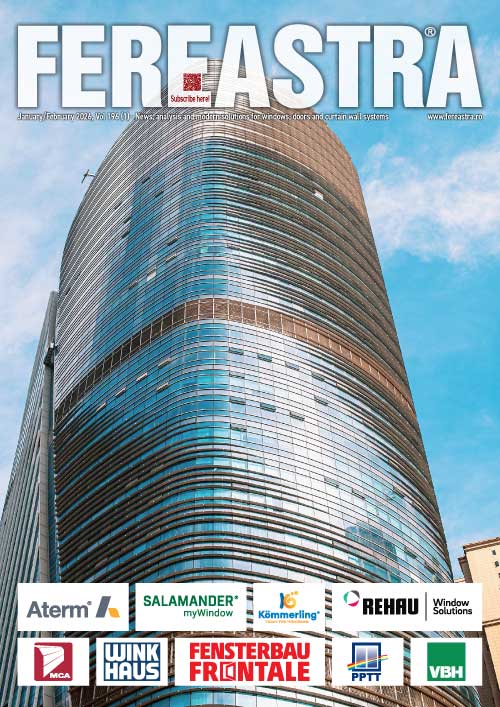
(articol aparut in revista Fereastra, editia Ianuarie/Februarie 2026)
In cadrul centrului expozitional Fiera Milano, din localitatea Rho – Italia, data de 23 octombrie 2013 va prilejui deschiderea celei de-a XVIII-a editii a prestigiosului targ pentru industria sticlei ...